The Best OTC Weight Loss Supplements In 2026 (Pills & Capsules)
In the United States the best OTC weight loss pills and capsules are usually not the ones promising dramatic fat loss in days.
The most useful OTC wellness products are the ones that clearly tell you what is inside (in the Supplement Facts panel), use ingredients that make physiological sense, and fit your routine without causing side effects that make you quit after week one.
Therefore this guide walks you through:
- What OTC weight loss pills and capsules can realistically do
- Various types of OTC weight loss supplements that work naturally
- OTC vs prescription weight loss medications
- A top 10 list of brand name products, including Lipotropic Pills by Healthier Manner
- Pros, cons, & ingredients used
OTC supplements are not approved by the FDA for treating obesity. Supplements quality also varies by brand. Read the Supplement Facts labe and follow directions. Consider talking with a clinician before using any kind of supplements.
If you would rather not swallow a capsule, compare the top weight loss patches
What are OTC weight loss supplements
There are many effective options for losing weigh and one of them may be via OTC weight loss supplements.
OTC stands for over the counter. Therefore these medication are available over the counter without a prescription. These supplements often may claim to help you lose weight by reducing hunger, increasing metabolism, or burning fat.
OTC supplements can be pills, pathes or liquid diets etc, and they are often sold in pharmacies or online. Their results can vary a lot, and some may have side effects, so it’s important to use them carefully and not replace a healthy diet and exercise.
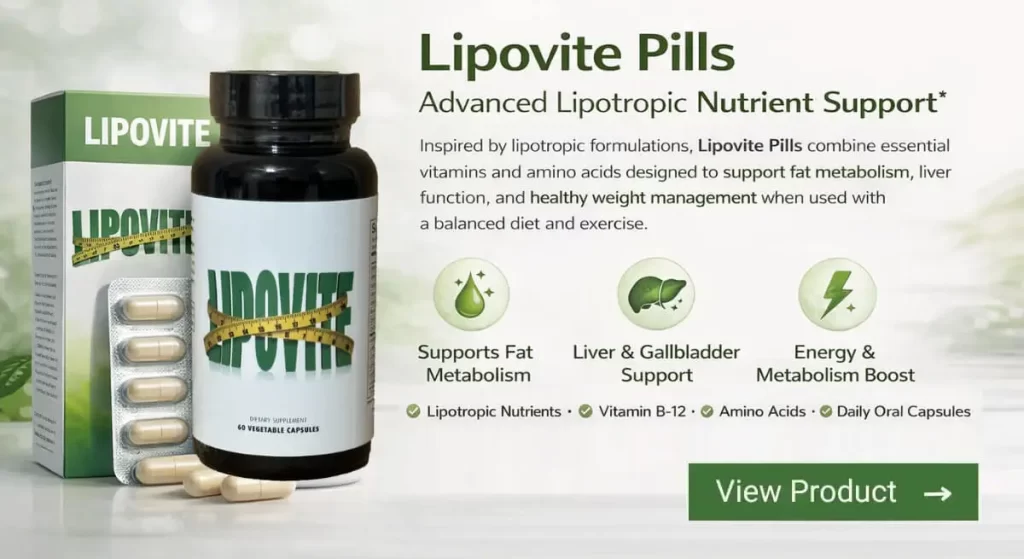
For examples: Lipovingual is a liquid diet for weight loss, Lipovite Patch is weight loss patch and Lipovite Pills comes under pills and capules and they all fall under the category of OTC weight loss supplements.
What OTC weight loss pills can do
Most OTC weight loss capsules support one or more of these goals:
- Appetite support (help you feel full or reduce snacking)
- Thermogenesis and energy (help you feel more “ON” which can increase activity)
- Carb or fat blocking (limited OTC options, and effects are often modest)
- Water weight and bloating support (fast scale change, not the same as fat loss)
- Metabolic support (often via caffeine, fiber, green tea, or certain plant extracts)
What they usually cannot do on their own:
- Override a consistently high calorie intake
- Replace strength training, protein intake, sleep, and basic meal structure
- Produce the kind of average losses seen with prescription GLP 1 medications
A practical way to think of OTC weight loss supplements is this: they are routine helpers. If they help you stick to a plan you already have, that is where the value often shows up.
OTC vs prescription weight loss medications
This question comes up constantly, so here is a straightforward comparison.
| Feature | OTC weight loss supplements | Prescription weight loss medications |
|---|---|---|
| Regulation | Treated as dietary supplements, not pre approved as drugs | FDA evaluated for safety and efficacy for weight loss |
| Evidence strength | Mixed, ingredient dependent, usually modest effects | Stronger clinical trial evidence, larger average weight loss |
| Typical effects | Appetite support, energy, mild thermogenesis, fiber fullness | Appetite and metabolic effects, often significant weight reduction |
| Risks | Stimulant side effects, interactions, inconsistent quality | Medication side effects, contraindications, requires clinician oversight |
| Best for | People wanting a support tool alongside diet and exercise | People meeting clinical criteria for obesity treatment |
If you are already on a prescription medication, do not stack random OTC weight loss pills on top without asking your prescriber. Many contain stimulants that can intensify side effects.
Various types of OTC weight loss supplements that work naturally
When you read labels, most products fall into these buckets:
1) Stimulant thermogenics
Common Supplement Facts ingredients: caffeine, green tea extract, guarana, yerba mate.
What people notice: energy, reduced appetite, more sweating during workouts.
Main downside: jitters, sleep issues, fast heartbeat, anxiety.
2) Non stimulant metabolic blends
Common ingredients: green tea decaf, carnitine, chromium, berberine like botanicals (berberine itself is common but can interact with meds), CLA.
What people notice: subtler support, often fewer jitters.
Main downside: GI upset, slower feel.
3) Fiber and fullness support
Common ingredients: glucomannan, psyllium, inulin, PGX.
What people notice: easier portion control and fewer cravings.
Main downside: gas, bloating, must drink water.
4) Water weight and bloat formulas
Common ingredients: dandelion, uva ursi, magnesium, potassium (varies), parsley.
What people notice: faster scale drop initially, less puffiness.
Main downside: not fat loss, dehydration risk if overdone.
5) Carb blocker style products
Common ingredients: white kidney bean extract (Phaseolus vulgaris).
What people notice: helpful for high carb meals for some people.
Main downside: gas, and effects depend on dose and diet.
What I looked for when choosing the best OTC supplements in 2026
This is the checklist many dietitians and supplement savvy communities use:
- Transparent Supplement Facts, with meaningful dosages (not just proprietary blends)
- Third party testing claims when available (USP, NSF, Informed Choice, etc.)
- Realistic positioning (no language like melt fat instantly)
- Ingredients with human research support
- Safety considerations clearly stated (stimulant warnings, pregnancy warnings)
Top 10 OTC weight loss supplements in 2026 (Pills & Capsules)
Below are 10 widely recognized OTC options in the US market. They are not all fat burners. Some are fiber based, some stimulant based, and some are metabolism support. That is intentional, because the best weight loss pills for you depend on your pattern: snacking, low energy, carb heavy diet, or bloating.
Quick comparison table
| Product (Brand) | Category | Key Supplement Facts ingredients (varies by version) | Best fit |
|---|---|---|---|
| Alli (orlistat 60 mg) | Fat blocker (OTC drug) | Orlistat 60 mg | High fat eaters who can tolerate GI effects |
| Hydroxycut (selected stimulant versions) | Thermogenic | Caffeine, green coffee, green tea | People wanting energy plus appetite support |
| Leanbean | Appetite support | Glucomannan, chromium, vitamins (varies) | Portion control focus, often marketed to women |
| Zantrex Blue | Stimulant thermogenic | Caffeine, botanical stimulants | Experienced caffeine users, not sensitive to stimulants |
| PhenQ | Multi ingredient | Caffeine, capsimax, chromium, botanical blends | People wanting all in one approach |
| Instant Knockout Cut | Thermogenic | Caffeine, green tea, cayenne, glucomannan (varies) | Workout focused users wanting a strong kick |
| Transparent Labs Fat Burner | Thermogenic, clean label style | Caffeine, green tea, forskolin, grains of paradise (varies) | Label readers who want dosage clarity |
| NatureWise CLA | Body composition support | CLA (conjugated linoleic acid) | People pairing with lifting and higher protein |
| NOW Glucomannan | Fiber fullness | Glucomannan | Budget friendly appetite support |
| Lipovite Pills (Healthier Manner) | Weight Loss/Lipotropic Supplement | Vitamin B12, Choline, Inositol & Amino Acids Blend | Ideal for individuals aiming for healthy weight management, fat metabolism support, liver health, and improved energy levels |
Now let’s talk through each one like you and I are reading the label together.
1) Alli (Orlistat 60 mg)
Alli is not a dietary supplement. It is an OTC weight loss drug. That makes it different, and for some people, more predictable.
How it works (simple version): it blocks some dietary fat from being absorbed.
Pros
- Mechanism is clear and studied
- Works best for people eating higher fat meals who are willing to adjust diet
Cons
- GI side effects are common, especially with high fat meals (oily stools, urgency)
- Requires careful label reading and meal planning
- Vitamin absorption can be affected, so some people use a multivitamin at a different time (ask a clinician)
Who it’s for
- People who want an OTC option with a drug mechanism and who can follow directions carefully
2) Hydroxycut (stimulant versions)
Hydroxycut has multiple versions. Some are high stimulant. Always check the Supplement Facts for caffeine.
Common label ingredients: caffeine anhydrous, robusta coffee extract, green tea.
Pros
- Noticeable energy and appetite effect for many users
- Can make workouts feel easier to start
Cons
- Not ideal for anxiety, insomnia, reflux, or heart rhythm concerns
- Easy to accidentally stack with coffee, energy drinks, or pre workout
Who it’s for
- People who tolerate caffeine well and want a stronger feel
3) Leanbean (fiber forward appetite support)
Leanbean is often marketed for appetite control. Many versions emphasize glucomannan, a fiber that expands in the stomach.
Pros
- Non speedy option compared to stimulant fat burners
- Fits people whose main issue is portion size and snacking
Cons
- Fiber can cause gas and bloating at first
- Must drink plenty of water, and timing matters (often before meals)
Who it’s for
- People who want weight loss capsules that focus on fullness, not stimulation
4) Zantrex Blue (strong stimulant style)
Zantrex products are known for stimulant like effects. Again, check caffeine.
Pros
- Strong energy support
- Some people report reduced appetite simply because stimulation blunts hunger
Cons
- Jitters, sleep disruption, fast heartbeat risk in sensitive users
- Not a beginner product for many people
Who it’s for
- People who already know they tolerate stimulants and want a hard hitting option
5) PhenQ (multi ingredient approach)
PhenQ is positioned as an all in one capsule, often combining caffeine, capsaicin style ingredients, and chromium.
Pros
- Convenient for people who do not want to combine separate products
- Often balances appetite and energy in one routine
Cons
- Multi blends can be hard to evaluate if dosages are not fully transparent
- Stimulant content may still be too much for some
Who it’s for
- People who prefer one bottle solutions and can tolerate moderate stimulants
6) Instant Knockout Cut (workout oriented thermogenic)
Often popular with gym focused users, this category typically includes caffeine plus heat style botanicals like cayenne, sometimes with glucomannan.
Pros
- Useful for people who train regularly and want energy plus diet adherence support
- Can be motivating during a calorie deficit
Cons
- Appetite suppression plus caffeine can backfire if you under eat then rebound at night
- Not great for those with sensitive stomachs
Who it’s for
- People pairing weight loss pills with a consistent training plan
7) Transparent Labs Fat Burner (label clarity focused)
Transparent Labs is known for more straightforward labeling. You still need to check caffeine amounts.
Pros
- Easier to compare dosages ingredient by ingredient
- Appeals to people who dislike vague proprietary blends
Cons
- Stimulant based versions can still affect sleep and anxiety
- Premium price point
Who it’s for
- I read every label shoppers who want cleaner formulation style
8) NatureWise CLA (body composition support)
CLA is often used as a longer term support supplement, especially paired with strength training and higher protein.
Pros
- Not a stimulant, generally easy to tolerate
- Fits people who care about body composition, not just scale weight
Cons
- Effects are usually subtle and slow
- Some people get GI upset
Who it’s for
- People lifting weights and looking for gradual support
9) NOW Glucomannan (simple fiber capsule)
If you want the most straightforward appetite support category, a single ingredient glucomannan product is the simple and boring choice, which is sometimes exactly what works.
Pros
- Clear label, easier to dose
- Can support portion control
Cons
- Requires water and correct timing
- GI side effects possible in the first week
Who it’s for
- People who want to start with one variable at a time
10) Lipovite Pills (Lipotropic Capsules)
For a comprehensive approach to weight management support Lipovite pills may be a good fit. It combines lipotropic nutrients for supporting fat metabolism and liver function.
Pros
- Multi-ingredients and nutrient formula (B12, choline, inositol, methionine)
- May help support fat metabolism and energy production
- Supports normal liver function and metabolic processes
Cons
- Not a direct fat-loss solution
- Requires regular diet and exercise for noticeable results
- Effects may vary between individuals
Who it is for
People who may need nutrient approach to support metabolism, energy, or overall weight management alongside a healthy lifestyle
How to choose the right OTC weight loss supplement for your pattern
Here is a practical match the tool to the problem table.
| Your biggest struggle | What often helps | Supplement Facts ingredients to look for |
|---|---|---|
| Constant snacking | Fullness support | Glucomannan, psyllium, inulin |
| Low energy to exercise | Mild thermogenic | Caffeine, green tea extract (watch total caffeine) |
| Carb heavy meals | Carb blocker support | White kidney bean extract |
| Bloating and puffiness | Bloat support | Magnesium (some forms), dandelion (use caution) |
| Plateau with training | Body comp support | CLA, protein focused plan, creatine (not a fat burner) |
Where liquid diets for weight loss fit in
People often pair weight loss pills with a liquid diet for weight loss, like meal replacement shakes or smoothies.
For many, a realistic middle ground works best:
- Replace one meal with a high protein shake (for example 25 to 35 g protein, some fiber)
- Keep the other meals solid with lean protein and produce
- Use an OTC supplement only if it helps adherence
A full liquid diet can be hard to sustain and may lead to rebound hunger. If you are thinking about doing liquids only for multiple days, that is a good time to involve a clinician or registered dietitian.
Safety and label tips
- Count your total caffeine per day. Many fat burners plus coffee can push you into side effect territory fast.
- Avoid stacking multiple stimulant products. That includes pre workout, fat burners, and energy drinks.
- Watch for hidden allergens and sweeteners in the “Other ingredients” section.
- Look for products that disclose dosages instead of only listing a proprietary blend.
- Be careful if you take medications. Common supplement ingredients can interact, especially stimulants and certain botanicals.
Bottom line
In 2026, the best OTC weight loss pills and capsules are the ones that match your habits, have a transparent Supplement Facts label, and help you stay consistent with food and movement without making you feel awful.
If you want a premium, routine friendly option, Lipovite Pills may fit best when the label aligns with your needs, especially if your goal is steady adherence rather than extreme stimulation. But if your biggest barrier is snacking, fiber based capsules may be surprisingly helpful.
Capsules are not the only option. If swallowing pills daily is the part that makes you quit, transdermal delivery sidesteps that entirely — see our comparison of the top weight loss patches for how the leading brands stack up on ingredients and cost per day.
Medical Disclaimer:
As a medical supplier, we share general educational information for informational purposes only. This content is not intended to diagnose, treat, cure, or prevent any medical condition and does not replace professional medical advice. Individual results may vary. Always consult a licensed healthcare professional for personalized medical guidance.
Related Posts
Types of Weight Loss Supplements Over-the-Counter That Actually Work Naturally
OTC Weight Loss Pills Versus Prescription Medications – What’s Right for You?