How Lipovite Pills Compare to Other OTC Fat Loss Pills
If you have been trying to lose weight for any length of time, you have probably stood in front of a supplement shelf wondering which bottle might actually help. The choices seem endless. Some products promise to burn fat while you sleep. Others talk about melting inches off your waist. Then there are lipovite pills and the whole family of lipotropic weight loss treatments that clinics and online stores keep recommending and it is easy to feel overwhelmed.
At Healthier Manner Inc., I have spent years working with weight loss clinics, retail buyers, and everyday people looking for honest answers about OTC weight loss and wellness supplements. Therefore this guide is written to explain the real differences. No hype. No medical advice.
What Are Lipovite Pills?
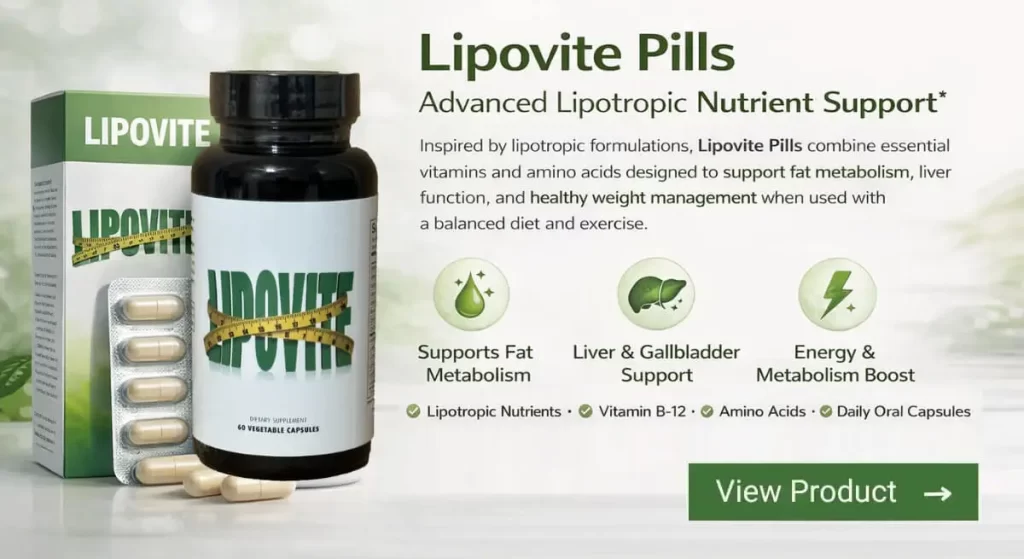
Lipovite is what you call weight loss supplements classified as lipotropics. The word lipotropic literally means fat loving or, to be more exact, helping fat move. This supplement contains three main ingredients that are necessary for the process of fat burning: methionine, inositol, and choline which are commonly known as MIC.
The function of methionine in our body is assisting in the process of breaking fats. It prevents the accumulation of fats in the liver. Inositol helps keep our cells functioning properly. Besides, it is responsible for proper insulin regulation in the organism. Choline assists in the production of lipotropic factor in the liver. It is necessary in order to move fat out of the liver for further use by the body. Moreover, many lipovite pills contain vitamins B12, B6, and B5 as well. Vitamins B are responsible for converting food we eat into energy.
In weight loss clinics, Lipovite is used as an injection, but nowadays, there are many over-the-counter lipovite pills on sale in the US. Most of them are produced in the form of capsules containing necessary amounts of lipotropics listed on the Supplement Facts label.
OTC Weight Loss Pills: What are they?
When someone says OTC weight loss pills, most people think of the vast number of dietary supplements available for purchase at pharmacies, vitamin stores, and on the Internet. These products generally fall into four principal areas:
- Fat Burners such as caffeine, green tea extract, green coffee bean and synephrine.
- Appetite Suppressants such as Glucomannan, 5-HTP, or fiber.
- Fat Absorption Blocker such as Alli (Orlistat 60mg). It is currently the only FDA-approved OTC weight loss product in the US.
- Carb Blockers/ Metabolism Booster which includes white kidney bean extract, forskolin, or conjugated linoleic acid (CLA)
Over-the-counter weight loss supplements differ significantly from prescription weight loss medications. Therefore when it comes to strict compliance OTC supplements aren’t required to undergo FDA-reviewed clinical testing for effectiveness in humans. However, manufacturers ensures that these products are produced in accordance with current Good Manufacturing Practices (GMP). Additionally, the Supplement Facts label must accurately represent the contents of the product.
Do OTC weight loss pills actually work?
Short answer, sometimes a little, but often not as much as the marketing suggests.
The most evidence based OTC option in the US is orlistat 60 mg. It works by blocking some fat absorption from food. Even then, it is not magic. It works best when the rest of the diet is structured too, and it can cause digestive side effects.
Some fiber based supplements may help people feel fuller, which can make eating less easier. This is not flashy, but it can be practical. A capsule that helps you feel less snacky at 9 pm may matter more than a bottle that promises wild fat loss and does very little.
Stimulant formulas can also create a short term effect. If a supplement has caffeine, for example, a person may feel more awake, move more, or have less appetite for a few hours. That does not always translate into real, lasting fat loss.
The honest answer to do OTC weight loss pills actually work is this. Some help modestly. Many help very little. A few are mainly just expensive marketing. The outcome depends on the ingredient, the dose, the person, and whether the product is actually used as directed.
Effectiveness of Lipovite vs over-the-counter weight loss supplements
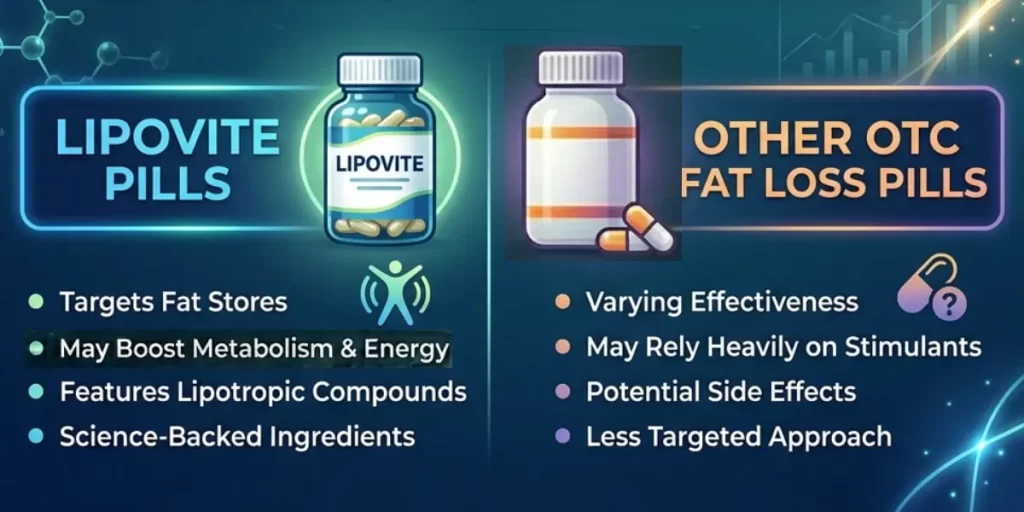
Lipovite pills are usually closer to metabolic support supplements. They may be a good fit for someone who wants to support nutrient intake or avoid very strong stimulant products. Many people like them because they feel gentler.
OTC weight loss supplements, on the other hand, may aim more directly at appetite, energy, or fat absorption. That sounds more powerful, and sometimes it is. But more power can also mean more side effects, especially if the formula is heavy on caffeine or herbal stimulants.
A simple way to think about it is this. Lipovite is often about support. Many OTC fat loss pills are about action. Support is not the same as action. Action is not the same as safe or effective action.
Here is a practical example. If someone is low in B vitamins, a Lipovite style supplement may help them feel less tired. That is a real benefit. But feeling better is not the same as losing body fat. On the other hand, a high caffeine fat burner may make someone feel energetic but shaky, and still not lead to much real weight change.
This is where the comparison gets useful.
| Ingredient or category | Common purpose | What the evidence usually suggests |
|---|---|---|
| B vitamins | Energy metabolism support | Helpful if there is a deficiency, but not a direct fat loss tool |
| Choline, inositol, methionine | Lipotropic support | Often marketed for fat metabolism, but weight loss evidence is limited |
| Caffeine | Energy and appetite support | Can help a little, but may also cause jitters or sleep issues |
| Green tea extract | Thermogenic support | Small or mixed effect, not dramatic |
| Fiber like psyllium | Fullness and regularity | Can help appetite control and meal satisfaction |
| Orlistat 60 mg | Reduces fat absorption | Strongest OTC weight loss option, but side effects are common |
| Garcinia, CLA, yohimbine, synephrine | Fat burner marketing ingredients | Evidence is mixed or weak, and tolerance varies |
What to look for on the Supplement Facts label
If you only remember one thing from this article, make it this. The Supplement Facts label tells you more than the front of the bottle ever will.
This is especially important with Lipovite pills and other OTC weight loss and wellness supplements. Two products can sound similar and still contain very different ingredients and amounts.
| Label item | Why it matters | What to check |
|---|---|---|
| Serving size | Tells you how much counts as one dose | A serving may be 1 capsule or 3 capsules, so check carefully |
| Active ingredients | Shows what may actually do something | Look beyond marketing words like detox or burn |
| Amount per serving | Helps you judge strength | Tiny amounts may not match the big promise on the front |
| Caffeine amount | Important for stimulant products | High caffeine can lead to jitters, anxiety, or trouble sleeping |
| Other ingredients | Helps spot fillers or allergens | Useful if you are sensitive to certain ingredients |
| Warning section | Shows key safety information | Read this before buying, not after side effects start |
| Third party testing | Suggests extra quality review | Not a guarantee, but it can add confidence |
| Expiration date | Helps with product quality | Old stock is not ideal |
| Manufacturer contact info | Supports accountability | A real company should be easy to identify |
One very common trap is the proprietary blend. That means several ingredients are lumped together under one total amount. In simple terms, that makes it harder to know how much of each ingredient you are actually getting.
OTC weight loss pills safety and side effects
This is where many people get surprised. Over the counter does not always mean gentle.
Lipovite style products are often milder than heavy stimulant fat burners, but they can still cause problems for some people, especially if they are combined with other supplements, coffee, energy drinks, or certain medications.
OTC weight loss pills safety and side effects vary a lot by formula.
| Product type | Common side effects | Main concern |
|---|---|---|
| Lipovite style supplements | Upset stomach, nausea, headache in some people | Formula may be mild, but not risk free |
| Caffeine heavy fat burners | Jitters, fast heartbeat, anxiety, sleep trouble | Stimulant load can add up quickly |
| Herbal blend fat burners | Stomach upset, dizziness, palpitations in some cases | Ingredient quality and dose can vary |
| Fiber based pills | Bloating, gas, constipation if water intake is low | Needs proper hydration and label reading |
| Orlistat 60 mg | Oily stools, urgency, gas, digestive changes | Can reduce absorption of certain nutrients |
A lot of retail reviews and online community posts in the US say the same thing over and over. Some people feel a burst of energy and some feel nothing. Some feel shaky, nauseated, or disappointed. That pattern matters because it shows how unpredictable these products can be.
Prescription vs OTC weight loss options
People often compare Lipovite pills to prescription medicines, but they are not the same category at all. Prescription products usually have stronger evidence and closer medical oversight. OTC products are easier to buy, but they often have weaker results and less monitoring.
| Category | Typical access | Strength of evidence | Oversight |
|---|---|---|---|
| Prescription weight loss options | Requires a clinician | Often stronger | Ongoing medical review |
| OTC drug options like alli | No prescription needed | Better studied than most supplements | Self directed, but label guided |
| OTC supplements like Lipovite | No prescription needed | Usually limited or mixed | Mostly buyer directed |
For people who want a simple answer, here it is. Prescription options are usually built for greater effect. OTC supplements are usually built for convenience, mild support, or broad wellness claims. Those are very different jobs.
Who might prefer Lipovite and who might prefer other OTC pills?
Lipovite pills may appeal to people who want a gentler wellness style product and are interested in lipotropic weight loss treatments as part of a broader routine. They are often more attractive to shoppers who want a supplement that feels less intense than a stimulant based fat burner.
Other OTC weight loss pills may appeal to shoppers who want appetite support, more noticeable energy, or a fat absorption product like orlistat. Even then, the label should guide the choice, not the front page promise.
For weight loss clinics, this is a useful counseling point. Ask clients to bring the bottle, not just describe the brand name. For retail buyers, this is the easiest way to avoid paying for hype.
A simple buying rule that helps
Before you buy any Lipovite pills or OTC fat loss pills, ask three questions.
First, what are the actual ingredients.
Second, what does the label say the serving size is.
Third, does the product make claims that sound bigger than the evidence.
If the answer to any of those is unclear, slow down.
A bottle that says supports metabolism is not the same as a bottle that has been shown to help with real weight loss. Therefore, a bottle that looks gentle on the front may still contain a strong stimulant dose and a bottle that costs more does not automatically work better.
Final take
When people ask Lipovite vs OTC weight loss pills, the real answer is not about which name sounds better. It is about the formula inside the bottle, the strength of the evidence, and the safety profile for the person using it.
Lipovite pills usually sit in the lipotropic and wellness category. Many OTC weight loss pills are more varied, ranging from mild fiber products to stimulant heavy fat burners to the FDA approved OTC drug orlistat. Some products may help a little. Some may help with energy or fullness. Many will not create major weight loss on their own.
So the smartest approach is simple. Read the Supplement Facts label, compare the actual ingredients, respect the warnings, and do not trust the front label more than the facts panel.
Medical Disclaimer:
This is an informational content and it does not intend to diagnose, treat, cure, or prevent any medical condition. It also does not replace professional medical advice. Individual results may vary. Always consult a licensed healthcare professional for personalized medical guidance.
Related Posts
Are Lipovite Pills Safe – What You Need to Know Before Starting
What Makes Lipovite Pills Effective for Weight Loss – A Deep Dive Into Its Key Ingredients
How to Take Lipovite Pills for Best Results (Dosage Instructions)