Are Weight Loss Patches Safe? FDA, FTC & Regulatory View
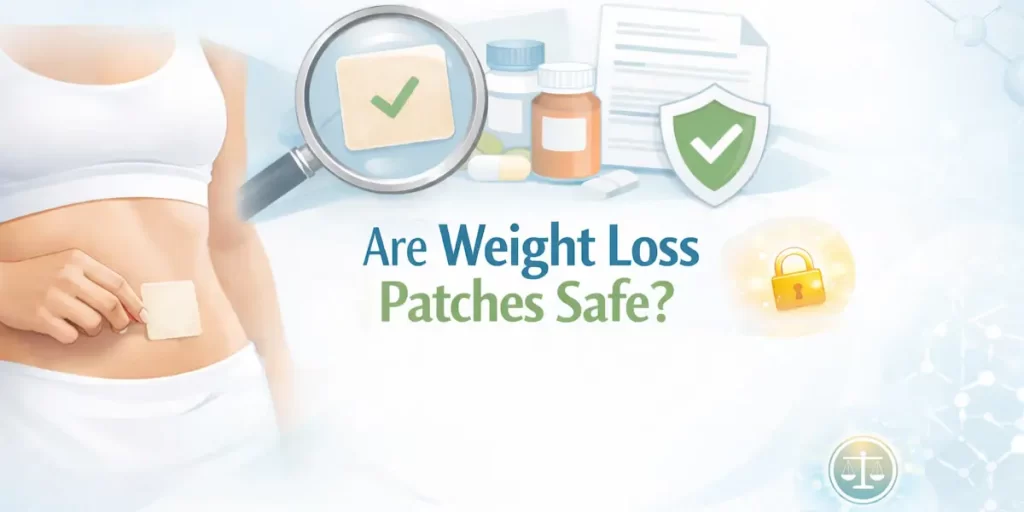
Weight loss patches are everywhere right now. You see them on social media, on marketplace sites, and sometimes even near the checkout aisle in convenience retail. And the pitch is always tempting: a simple patch on your skin that helps control appetite, burn fat, or “detox” while you go about your day.
But if you run a weight loss clinic, sell OTC products, or you are simply trying to make a smart choice for yourself, the real question is the one people type into Google every day: are weight loss patches safe?
This guide breaks down how the FDA and FTC approach weight loss patch regulation, what common weight loss patch safety concerns look like, and how to read these products through the lens of a Supplement Facts label.
What Are Weight Loss Patches?
A weight loss patch is usually an over the counter product that sticks to the skin and claims to deliver ingredients “transdermally” through the skin to support weight management. These are typically sold as dietary supplements, not through prescription.
Here is the practical reality. When you swallow a supplement, you can at least verify what is in it and how much you are taking based on the Supplement Facts panel. With patches, dosage and absorption are often less clear. Some brands still include a Supplement Facts type panel, but the delivery route is different, and many marketing claims go well beyond what the label supports.
Common patch positioning includes:
- Appetite control
- Craving reduction
- Fat burning or metabolism boost
- Detox support
- Energy support
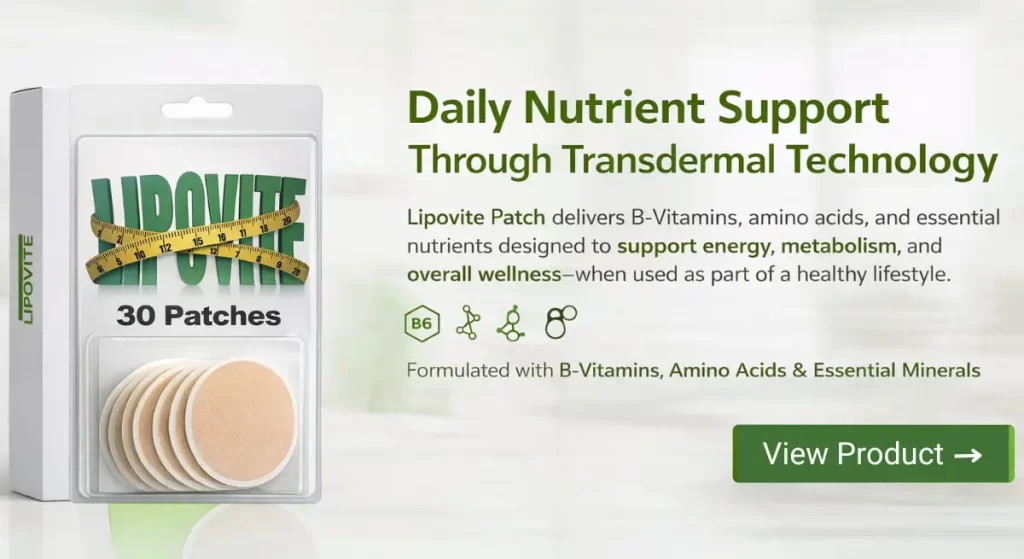
The Lipovite Patch is a good example of a weight-loss patch. It is formulated with B vitamins, amino acids, and essential minerals.
If you want a deeper ingredient focused overview, check the following article to understand more about weight loss patch ingredients.
Are Weight Loss Patches FDA Approved?
In most instances, weight loss patches are not FDA-approved products for weight loss.
It is important for clinics and retailers to clearly distinguish between FDA registration, FDA-compliant labeling, and FDA approval, as these terms are often misunderstood by consumers.
FDA registration or compliant labeling does not mean FDA approval.
The key FDA concept consumers often miss
For dietary supplements, the FDA does not test supplements for their effectiveness prior to their being sold. A weight-loss patch may legally be sold as a supplement even without evidence that it causes weight loss, provided it does not make false or misleading claims
The FDA’s role in the context of dietary supplements is generally post-marketing. This means the FDA is free to take appropriate action regarding a dietary supplement product if it is deemed to be an imminent health hazard, is an adulterated or misbranded product, and contains pharmaceutical compounds.
Quick comparison table: FDA approval vs supplement marketing
| Topic | Prescription weight loss drugs | Most weight loss patches sold OTC |
|---|---|---|
| Pre-market FDA approval for weight loss claims | Yes | No |
| Proof of effectiveness required before sale | Yes | FDA does not evaluate supplements for effectiveness |
| Manufacturing rules | Drug GMPs | Supplement GMPs (different standard) |
| Typical regulatory category | Drug | Dietary supplement or cosmetic depending on claims |
Bottom line: if a patch is marketed like a drug (for example, “treats obesity” or “melts fat”), that is a regulatory red flag.
What Does the FDA Say About Patch Ingredients?
The FDA does not publish “approved ingredient lists” for weight loss patches, but the agency repeatedly warns the public about a familiar pattern in weight loss products: hidden drug ingredients or drug analogs, especially in products that promise fast, dramatic results.
Here are a few big takeaways relevant to weight loss patch regulation:
a) Supplements should not contain prescription drug ingredients.
FDA warning letters and public notices frequently involve weight loss supplements adulterated with pharmaceutical compounds. Even when a label looks “natural,” the risk is that it may not match what is actually in the product.
b) “Natural” does not mean safe.
Botanical ingredients can still trigger side effects, interact with medications, or irritate skin when placed under adhesive for hours.
c) Transdermal delivery is not automatic.
Skin is a barrier. Some compounds do not absorb well through intact skin. So if a patch promises drug-like results from vitamins or plant powders, it is fair to question whether the claim is scientifically plausible.
d) Labeling matters, especially the Supplement Facts panel.
Clinics and retailers can protect customers by prioritizing products with transparent labeling, clear serving size directions, and realistic structure-function support language rather than aggressive fat loss claims.
Many patch ads imply you can ignore nutrition and activity entirely, such claims could be misleading. To know more refer to our article Do Weight Loss Patches Work Without Diet?
FTC Rules on Weight Loss Claims
If the FDA is the agency people associate with product “approval,” the FTC is the agency that often gets involved when marketing goes off the rails.
Here is the core principle: advertising must be truthful, not misleading, and supported by evidence.
a) FTC acts only on deceptive marketing, not product safety.
That means the FTC’s job is not to decide whether a patch is safe for your body. The FTC’s job is to stop companies from making claims that are not properly substantiated or that mislead consumers.
b) What counts as good evidence under FTC supplement rules?
For weight loss claims, the FTC generally expects competent and reliable scientific evidence, often meaning well controlled human clinical studies, not testimonials, not “before and after” photos, and not vague traditional use.
c) Common claim types that trigger FTC scrutiny
- Lose 10 pounds in 7 days
- Burn fat while you sleep
- No diet or exercise needed
- Clinically proven with no accessible study details
- Doctor approved endorsements without real disclosure
For retailers and clinics, one practical risk is reputational. Even if you are not the manufacturer, consumers often blame the seller when promises do not match reality.
Common Safety Concerns & Side Effects
When people ask “are weight loss patches safe,” they usually mean two things:
- Is the product itself risky?
- Is the way it is being marketed pushing people into unsafe expectations?
Here are the most common weight loss patch safety concerns seen in real-world use.
1. Skin irritation and allergic reactions
Because patches sit on the skin for hours, the most frequent issue is local reaction:
- Redness
- Itching
- Rash
- Blistering from adhesive sensitivity
This is especially common if someone applies a patch to sweaty skin, broken skin, or keeps it on longer than directed.
2. Unknown dosage and unpredictable absorption
Even if the label lists ingredients, the actual amount absorbed can vary by:
- Skin thickness and hydration
- Placement location
- Heat exposure (hot showers, saunas)
- Patch contact quality
This is one reason many clinicians are cautious about transdermal supplement claims.
3. Stimulant-like effects (when applicable)
Some patches include ingredients marketed for “energy” or “metabolism.” Depending on the formula, some users report:
- Jitteriness
- Trouble sleeping
- Faster heartbeat sensations
Again, this is not a diagnosis. It is a pattern of consumer-reported experiences that deserves caution, especially for people sensitive to stimulants.
4. Hidden ingredients and quality control issues
This is the bigger systemic risk. Products in the weight loss category are historically more likely to be adulterated than boring categories like basic vitamins. If a patch is sold through questionable channels with dramatic claims, the risk goes up.
Safety concerns at a glance
| Safety concern | What it can look like in real life | Why it matters |
|---|---|---|
| Skin irritation | Rash where the patch sat | Most common issue and can discourage use |
| Sensitivity to adhesives | Itching or welts | More likely in people with eczema or allergies |
| Unclear absorption | No effect or unexpected strong effect | Hard to predict user experience |
| Stimulant response | Insomnia or jittery feeling | Increases discomfort and may worsen anxiety |
| Quality issues | Label does not match contents | Higher risk category for adulteration |
Who Should Avoid Weight Loss Patches?
This is where good OTC counseling matters, because the “safe for everyone” vibe in ads is not realistic.
People who should be extra cautious and generally avoid use unless a clinician says otherwise include:
- Pregnant or breastfeeding individuals
- Teens and children
- People with known adhesive allergies or frequent skin reactions
- People with chronic skin conditions where occlusion worsens symptoms
- Anyone taking prescription medications where interactions are a concern
- Anyone with a history of eating disorders or restrictive dieting patterns (because aggressive weight loss messaging can be triggering)
For clinics: a gentle but clear intake question like “Do you react to bandages or medical tape?” can prevent a lot of problems.
Smart Label Reading: How to Vet a Patch Like a Pro
Even though patches are not always presented like classic capsules, you can still apply supplement common sense.
What to look for:
- A clearly printed ingredient list and directions
- A company address and customer service contact
- Claims that sound like “supports” rather than “guarantees”
- Lot numbers and expiration dating
- Avoidance of drug-like promises
What to be skeptical of:
- “Melt fat” or “target belly fat” language
- “Detox toxins” claims without specifics
- “Works without diet” guarantees
- Only testimonials as proof
A practical retailer approach is to stock fewer products, but stock better documented ones. If you want to know what best weight loss patches should be like, then focus on transparency, label quality, and responsible marketing rather than miracle promises.
Final Verdict: Are Weight Loss Patches Safe?
So, are weight loss patches safe?
For many adults, the most common risk is mild skin irritation. But the bigger picture is that safety depends heavily on product quality, realistic expectations, and avoiding deceptive claims.
Here is the straightforward conclusion:
- Most weight loss patches are not FDA-approved for weight loss.
- FDA does not evaluate OTC supplements for effectiveness, which means “sold legally” does not equal “proven to work.”
- The FTC can step in when ads cross the line. They acts only on deceptive marketing, not product safety.
If you are a clinic or retailer, the safest route is to prioritize transparent labels, conservative claims, and consumer education. If you are an individual shopper, treat dramatic promises as a warning sign, not a benefit.
Frequently Asked Questions
Are weight loss patches FDA approved?
Most OTC weight loss patches are not FDA-approved for weight loss. They are typically sold as dietary supplements. FDA does not evaluate supplements for effectiveness before they reach the market.
What does the FTC regulate for weight loss patches?
The FTC focuses on advertising. Under FTC supplement rules, companies must have adequate evidence for their claims. FTC acts only on deceptive marketing, not product safety, so it is not a safety approval agency.
What are the most common weight loss patch safety concerns?
Common concerns include skin irritation from adhesives, allergic reactions, unclear dosing and absorption, and the risk of low-quality products with questionable labeling.
Do weight loss patches work without diet?
Any product that claims to lose weight with no changes to food intake or activity is not true. Those ads often conflict with weight loss patch regulation and FTC advertising concerns.
What should I look for on the label before buying?
Look for a clear ingredient list, directions, warnings, company contact details, and realistic wording. When available, use the Supplement Facts panel as your anchor for transparency.
Are “clinically proven” weight loss patches trustworthy?
Only if the company can provide high quality human study evidence that matches the exact product and claim. Testimonials and before-after photos are not strong proof under FTC standards.
Disclaimer:
This post functions as educational and informative content, meant for the general audience in the United States. This does not intend to provide any sort of medical advice, diagnoses, and treatments. Always read the guidelines and consult a licensed physician when using any product, especially in cases of someone being affected by a medical condition and taking any sort of medication.
More Resources
Slim Patch Vs. Weight Loss Patches: What’s the Difference?
How Long Should You Use a Weight Loss Patch for Best Results?
Weight Loss Patch – All You Need to Know About This Slimming Trend
Weight Loss Patch Ingredients: What to Know Before Buying
How Much Do Weight Loss Patches Cost?
10 Powerful Benefits of Weight Loss Patches Over Pills or Diets
How Do Weight Loss Patches Work? Science Behind the Slimming
The Best Weight Loss Patches in 2026: Our Top Picks and Reviews